IT'S A MUST!

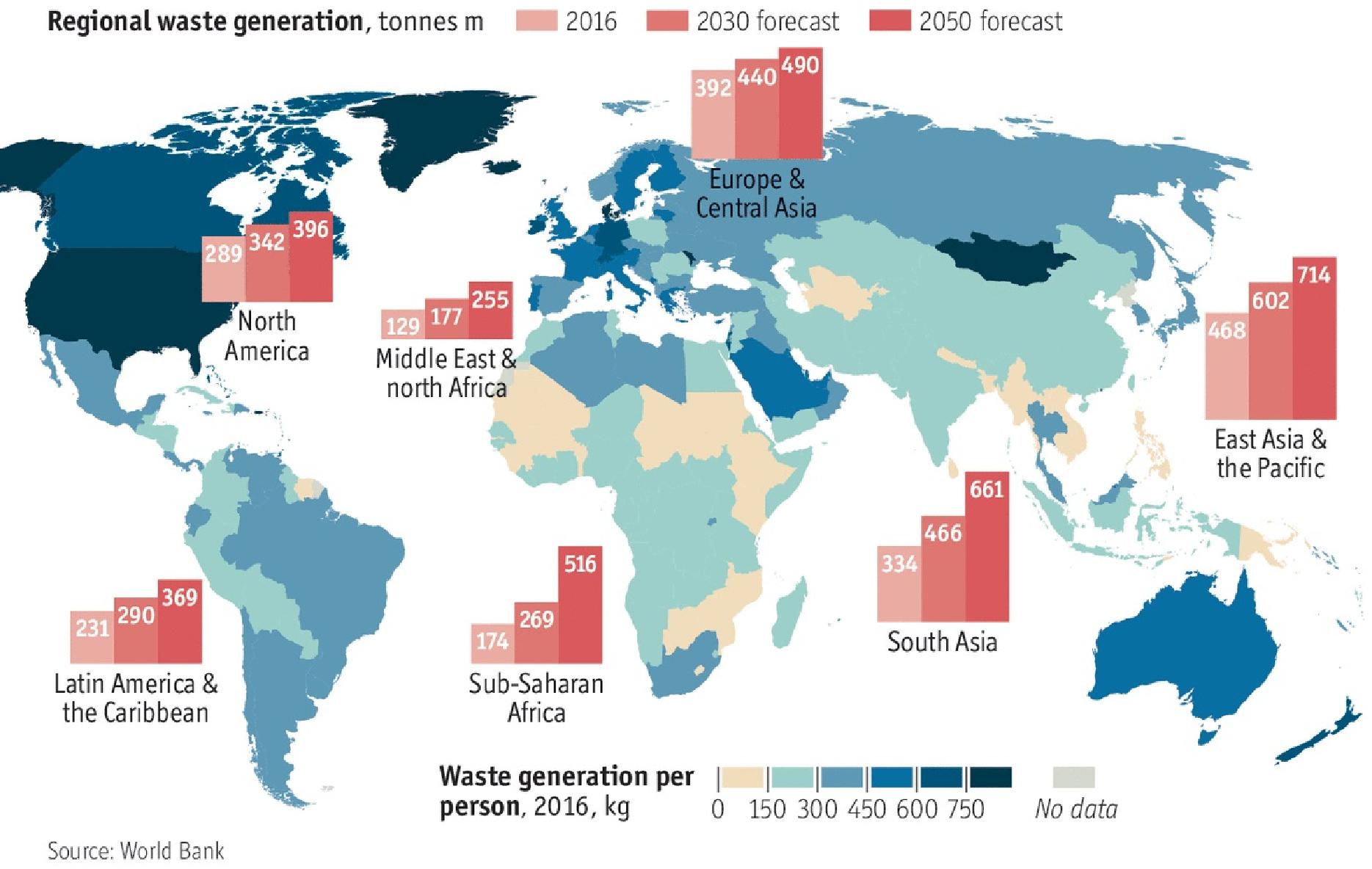
When dealing with waste management, reference is made to the waste hierarchy. According to The World Bank, 3.4 billion tonnes of municipal solid waste (MSW) will be generated around the world in the year 2050. That's next 30 years. Nearest projection is 1.8 billion tonnes of MSW will be generated in the year 2025, in Asia.

Wherever & whenever the data may be applied, the figures are close related to the population growth and urbanization trend. Almost impossible to avoid the huge number but we must not let it all go for disposal. Thus, the remaining 3R options must consist of more creative, innovative and attractive approaches to have an effective results.

Only then we can manage our waste, better.

THE FOCUS

The background photo above depicted bird view of MSW at landfill. From our point of view, we determined how big the area it covers and will cover in the future. Some portion of it can be processed using the environmentally friendly reduce, reuse, and recycle (3R) activities. Some might extent the idea up to 7R in a circular flow — rethink, refuse, reduce, repurpose, reuse, recycle and rot. It can be even more but let's just focus on the 3R initiatives for a start.

Most importantly, we want to Waste Better. Do better today for a better tomorrow.

Reduce 

 This segment potentially applied to food waste like uneaten leftovers and spoilt produce. With sustainability management, most of the food waste will no longer end up at landfills where they used to take up space and release potent greenhouse gas. Leftovers can be used to provide communities aid movement especially for those in need. Alternatively, food scraps and yard waste can be composted.

Reuse

Used items are less expensive and possibly as good as new. Borrow, rent or share items that are used infrequently like party decorations, tools or furniture. One person's trash is another person's treasure. Instead of discarding unwanted appliances, donating to community centers, thrift stores, schools and nonprofit organizations is a good way of reuse. Items such as clothes, books and toys, can also be donated or sale at lower price.

Recycle

Recycling is the process of collecting and processing materials that would otherwise be thrown away as trash but turning them into new products. Recycling can benefit community and the environment by diverting the recycled items from landfills. In a way, it increases economic security by tapping a domestic source of materials, creating job opportunities and lowering pollution as less new raw materials areneeded. It conserves natural resources.

Skills

Research & Development

R&D is our strength. Environmental design 

Database

This is a paragraph. To edit this paragraph, highlight the text and replace it with your own fresh content.

HTML 5

This is a paragraph. To edit this paragraph, highlight the text and replace it with your own fresh content.

Applied Knowledge

We want to start simple. Out of our technical and academic research, we want to contribute to the people and nature. 

JavaScript

This is a paragraph. To edit this paragraph, highlight the text and replace it with your own fresh content.

Bug-Free

This is a paragraph. To edit this paragraph, highlight the text and replace it with your own fresh content.

Clients

Bronson Castaneda

This is a paragraph. To edit this paragraph, highlight the text and replace it with your own fresh content.

Carolina Warner

This is a paragraph. To edit this paragraph, highlight the text and replace it with your own fresh content.

Social

This is a paragraph. You can use this to communicate content within your page.

© Waste Better 2020